

Key Takeaways
Google’s E-E-A-T model is essential for SEO success.
- Experience: Share real-world insights.
- Expertise: Provide accurate, well-researched content.
- Authoritativeness: Build a trusted reputation.
- Trustworthiness: Ensure content is reliable and secure.
Focusing on these pillars helps improve SEO and user trust.
Introduction
When I first heard about Google E-E-A-T, I knew it was something important. It’s a model that helps Google decide what content is good enough for its users. But it wasn’t until I started applying it to my own work that I realized how much it could shape my SEO game.
I found out that being good at SEO is more than just knowing keywords; it’s about showing that the content you create is credible, trustworthy, and actually useful.
In this guide, I’ll break down the E-E-A-T framework and show you how to use it for your own SEO success.
What Is Google E-E-A-T & Why It’s Your SEO Superpower
I first heard about Google E-E-A-T and immediately realized how essential it is for my content. It’s all about making sure that Google knows your content is useful, reliable, and trustworthy.
E-E-A-T Explained: My Key to Quality Content
- Experience: Google values content that shows real, hands-on experience. It’s not just about the facts but about showing that I’ve been there and done that.
- Expertise: Google also looks for content written by people who really know their stuff. This helps me prove that I’m providing useful and accurate information.
- Authoritativeness: I need to show that I’m a recognized voice in my field. This comes from having strong references and links from other credible sites.
- Trustworthiness: Google cares about whether users feel safe. Secure websites, clear privacy policies, and good user reviews play a big role in building this trust.
The Evolution: Why Experience Became Part of E-E-A-T
In December 2022, Google made a big change. They added “Experience” to the original E-A-T model.
- First-Hand Knowledge: It’s about sharing personal stories or insights. This isn’t just theory—Google wants to see the real experience behind the content.
- Why It Matters: For me, this means I have to show my own experiences, not just what others say. It’s more personal and much more valuable to readers.
Why It Matters: How E-E-A-T Helps Google Rank Content
- Quality Over Quantity: Google wants content that’s not just optimized for keywords. It needs to be genuinely useful.
- Reader-Centric: With E-E-A-T, I can focus on providing what the reader truly needs. This is how I create content that doesn’t just chase rankings but also helps people.
Table: E-E-A-T Pillars in Action
| Pillar | Action | Why It Matters |
|---|---|---|
| Experience | Share real-life stories and examples | Builds trust by showing real-world knowledge |
| Expertise | Cite your qualifications and experience | Google favors content written by experts |
| Authoritativeness | Earn backlinks from reputable sites | Demonstrates recognition from trusted sources |
| Trustworthiness | Use HTTPS, clear policies, and positive reviews | Ensures the content is secure and reliable |
The 4 Pillars of E-E-A-T: What They Really Mean
E-E-A-T is all about making content trustworthy and credible. Let me break down the four key pillars.
Experience: The Power of First-Hand Knowledge
- Definition: Demonstrating real-world involvement with the subject matter.
- Examples:
- A travel blogger sharing personal experiences from a recent trip.
- A chef providing recipes they’ve personally tested.
- Why It Matters: Google values content that reflects genuine experience. This is especially true for topics where personal insight adds credibility. When I write about something I’ve personally done, readers trust it more.
Expertise: Knowledge That Shines
- Definition: The depth of knowledge or skill in a particular area.
- Indicators:
- Author credentials and qualifications.
- Detailed, accurate, and well-researched content.
- Why It Matters: When I show I know my stuff, readers find the content more valuable. Google looks for this level of detail to trust what’s being said.
Authoritativeness: Being Recognized as a Go-To Source
- Definition: The reputation of the website or content creator within the industry.
- Indicators:
- Mentions or citations by other reputable sources.
- Awards or recognitions in the field.
- Why It Matters: Building authority means people see me as a trusted source. This boosts credibility with Google and readers alike.
Trustworthiness: The Foundation of Credibility
- Definition: The reliability, honesty, and safety of the content and website.
- Indicators:
- Secure website (HTTPS).
- Transparent contact information and privacy policies.
- Positive user reviews and testimonials.
- Why It Matters: I need my website to feel safe. Google prioritizes content that users can trust. When people feel confident, they stick around longer.

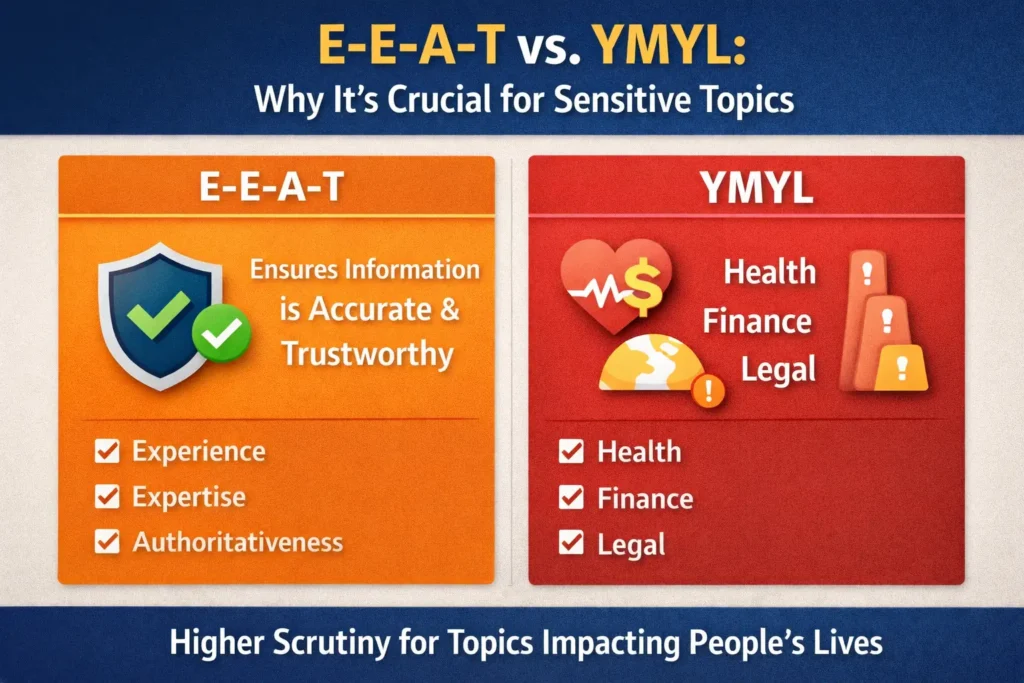
E-E-A-T vs. YMYL: Why It’s Crucial for Sensitive Topics
When dealing with sensitive content, I’ve learned that Google gets stricter. YMYL topics are under more scrutiny.
YMYL Defined: “Your Money or Your Life”
- Definition: YMYL topics include areas like health, finance, and legal advice. These subjects have a direct impact on people’s lives and well-being.
- Why It Matters: Google gives these topics extra attention. This means higher standards for content that impacts users’ health, finances, or safety.
E-E-A-T’s Role: How E-E-A-T Protects Users
- Why It’s Important: For YMYL content, Google needs to ensure information is accurate and trustworthy. This means showing more emphasis on E-E-A-T.
- Example: A medical website offering health advice needs qualified professionals writing the content. Without this, the website won’t be seen as trustworthy by Google or users.
How to Build E-E-A-T: Practical Steps
Building a strong E-E-A-T profile isn’t hard when I focus on the right areas.
Showcase Author Credentials
- Actions:
- Include detailed author bios with qualifications and experience.
- Link to professional profiles (e.g., LinkedIn).
- Why It Works: Demonstrating expertise builds trust with readers. When people see credentials, they know they can rely on the content.
Create High-Quality, Original Content
- Actions:
- Conduct thorough research and provide unique insights.
- Avoid duplicate content and plagiarism.
- Why It Works: Original content shows I’m providing something new, not just copying. Google values this type of content more.
Build a Positive Online Reputation
- Actions:
- Engage with reputable sites and earn backlinks.
- Encourage satisfied users to leave positive reviews.
- Why It Works: A solid reputation makes my content more authoritative. It helps both users and Google trust my site.
Ensure Website Security and Transparency
- Actions:
- Implement HTTPS and display security badges.
- Provide clear privacy policies and contact information.
- Why It Works: A secure, transparent website makes users feel safe. Google rewards websites that provide this level of trust.
E-E-A-T in Action: Real-World Examples
Seeing how others apply E-E-A-T helps me understand what works.
Epic Gardening: Personal Experience Goes a Long Way
- Example: Kevin Espiritu built a trusted gardening site, even without formal horticulture qualifications. His first-hand experience helped establish trust and credibility.
CNBC: Expertise in Action
- Example: CNBC’s articles on complex topics like the Chinese economy are authored by senior correspondents. Their industry expertise proves the site’s authority and trustworthiness.
E-E-A-T Levels: From Low to High
I’ve seen that Google’s way of ranking content is all about E-E-A-T. Understanding these levels helps me know where my content stands.
Lowest: Content That Hurts More Than It Helps
- Definition: Content that is spammy, lacks credibility, and can mislead users.
- Why It Matters: Content at this level isn’t just ineffective. It can actually harm a site’s reputation and rankings.
Lacking: Missing the Mark on E-E-A-T
- Definition: Content that lacks the necessary E-E-A-T to meet its purpose.
- Why It Matters: If the content doesn’t have sufficient experience, expertise, or trustworthiness, it struggles to rank well.
High: The Content That Shows Real Value
- Definition: Content that demonstrates experience, expertise, credibility, and trustworthiness.
- Why It Matters: Content that reaches this level shows users they can trust it. It provides genuine value.
Very High: The Go-To Source
- Definition: Content created by recognized experts or published on high-authority sites.
- Why It Matters: Content at this level is seen as the best of the best. It’s reliable, well-known, and consistently trustworthy.
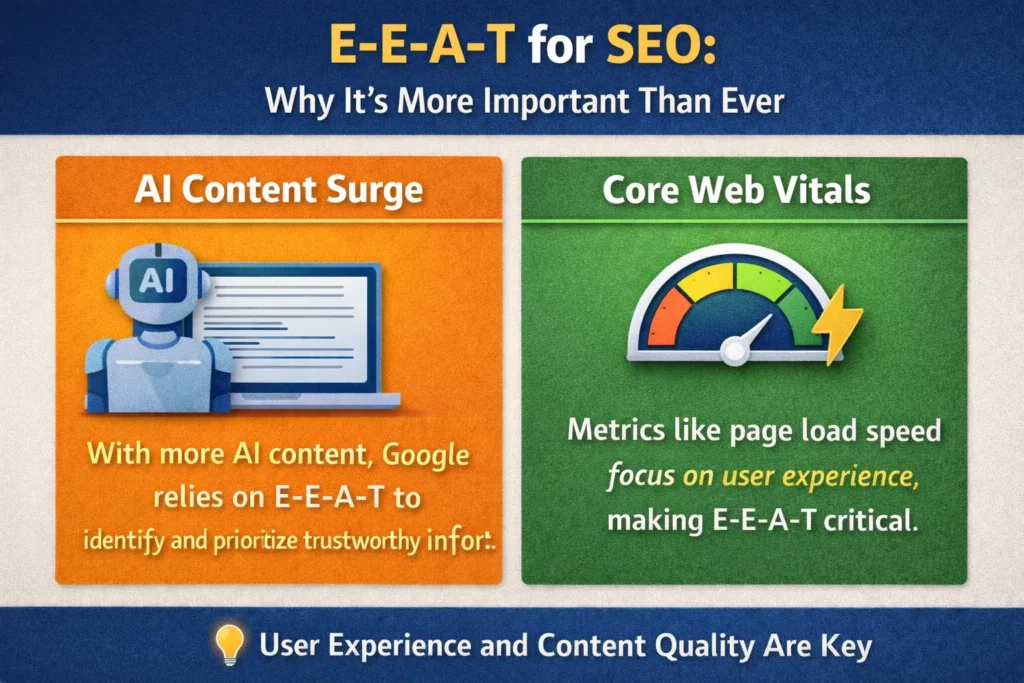
E-E-A-T for SEO: Why It’s More Important Than Ever
As I work on improving my SEO, I’ve realized that E-E-A-T is becoming even more essential, especially with AI content.
AI Content Surge: Why E-E-A-T Is Key for Google
- Why It Matters: With AI-generated content on the rise, Google relies more on E-E-A-T to tell real content from machine-made content. I’ve seen that this makes human-authored, high-quality content stand out.
Core Web Vitals: Why User Experience Counts
- Why It Matters: Core Web Vitals are essential to SEO. Metrics like page load speed and interactivity align with E-E-A-T. It’s all about giving users a great experience, and Google notices when I do that.
Measuring E-E-A-T: Tools and Metrics
I use a few tools to track how well my content measures up to E-E-A-T. It’s an ongoing process, and these tools keep me on track.
Google Analytics: Tracking User Engagement
- Why It Works: With Google Analytics, I can check metrics like bounce rate and time on page. If users engage with my content, it tells me I’m on the right track.
Google Search Console: Monitoring Search Queries
- Why It Works: This tool helps me identify search queries and pages with high click-through rates. I can see which content is working well and which needs improvement.
Third-Party Tools: Analyzing Backlinks and Authority
- Why It Works: Tools like SEMrush or Ahrefs help me monitor backlinks and domain authority. This shows me how trustworthy my site is and where I can improve.
E-E-A-T Myths Debunked
Over time, I’ve heard a lot of myths about E-E-A-T. Let’s clear them up.
Myth 1: E-E-A-T Is a Direct Ranking Factor
- Reality: E-E-A-T is part of Google’s guidelines, but it’s not a direct ranking factor. Google’s human evaluators use it to assess content quality, not to decide rankings.
Myth 2: You Can Fake E-E-A-T Signals
Reality: I’ve realized that reputation isn’t something I can fake. It’s about what others say about me. Building trust takes time and genuine effort.
E-E-A-T for Long-Term SEO Success
Mastering E-E-A-T is essential for building trust with both Google and users. By focusing on creating high-quality, credible, and user-centered content, I can ensure lasting SEO success. Keep improving your content and stay aligned with Google’s guidelines for long-term results.
Start using Milestoneage Online SEO services today to elevate your digital presence.
Frequently Asked Questions
What is E-E-A-T in SEO?
It stands for Experience, Expertise, Authoritativeness, and Trustworthiness, vital for ranking well on Google.
How can I build trust with Google?
Focus on quality content, gain backlinks, and ensure website security to improve trustworthiness.
Does E-E-A-T affect rankings?
E-E-A-T doesn’t directly affect rankings but influences Google’s quality assessment and trust in content.