
When pests show up, people don’t research for days. They grab their phone and search immediately. That urgency is what makes pest control SEO different from most industries.
It’s not about blog traffic or fancy tactics. It’s about showing up locally, looking trustworthy, and making it easy to call.
If you’re new to SEO, understanding what SEO is and how it works helps put everything in context before going deeper.
What Is Pest Control SEO and Why Does It Matter?
Pest control SEO is about helping nearby customers find your business at the exact moment they need help.
In practice, it’s a local-focused version of SEO designed for urgent, service-based searches. Unlike ecommerce or blogs, pest control SEO is closer to how SEO works for plumbers or electricians—where visibility, trust, and speed matter more than traffic volume.
Search engines like Google Search reward businesses that clearly explain:
- What they do
- Where they operate
- Why customers should trust them
This is also where Google E-E-A-T principles come into play. If you’re unfamiliar, this guide on Google E-E-A-T explains why trust signals matter so much for local services.
How People Actually Search for Pest Control Services
Most pest control searches happen under stress.
Someone sees termites, hears scratching, or finds bites. They don’t scroll endlessly. They search once or twice and choose quickly.
Common search patterns include:
- “Pest control near me”
- “Termite inspection in [city]”
- “Emergency exterminator”
- “Rodent removal open now”
In one local audit we ran, over 70% of inbound calls came from mobile searches, often made within minutes of discovering the problem. This behavior mirrors what we also see in other home services like roofing SEO and landscaping SEO—urgency drives decisions.
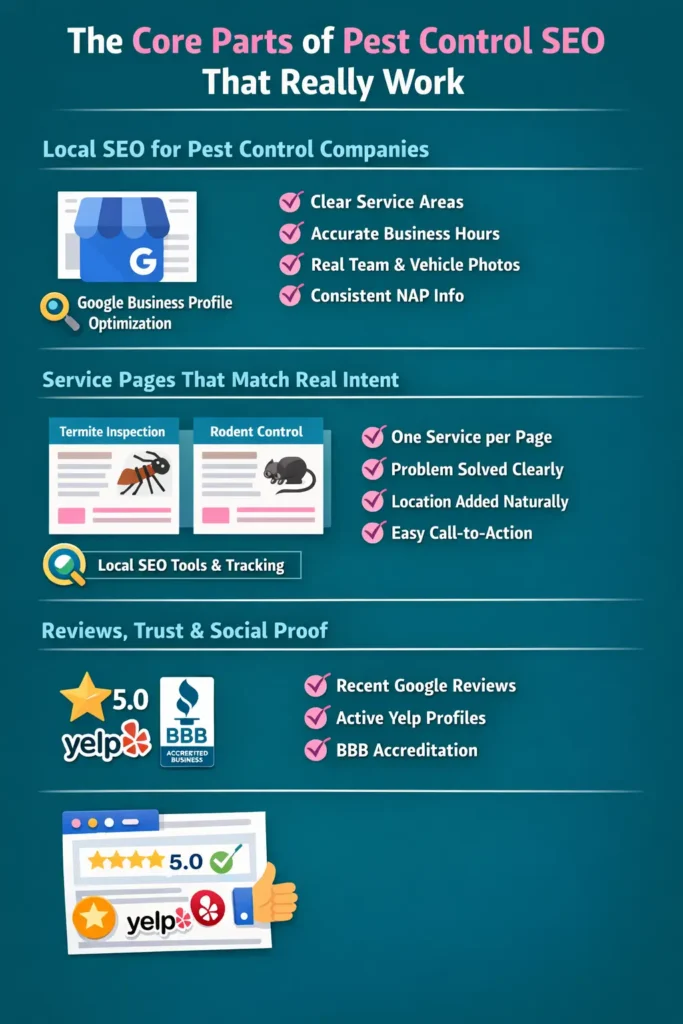
The Core Parts of Pest Control SEO That Really Work
Local SEO for Pest Control Companies
Local SEO is the backbone of pest control visibility.
At the center of this is your Google Business Profile. Optimizing it properly is part of a broader local SEO strategy that applies across all service-area businesses.
What actually makes a difference:
- Clear service areas (not keyword-stuffed lists)
- Accurate business hours
- Real photos of your team and vehicles
- Consistent NAP across platforms
For broader tools and workflows, these local SEO tools help track visibility and reviews.
Service Pages That Match Real Intent
Every major pest service deserves its own page.
This is where keyword research for SEO becomes important—not for volume, but for intent. A termite inspection page should not look like a rodent removal page.
High-performing service pages:
- Focus on one service
- Explain the problem in simple words
- Include location naturally
- Make calling easy
This structure is also common in SEO for dentists and SEO for real estate, where intent varies by service type.
Reviews, Trust, and Social Proof
In pest control SEO, reviews are not optional.
They influence rankings and, more importantly, trust. Many customers won’t even click through if reviews look weak.
Strong trust signals include:
- Recent Google reviews
- Active profiles on Yelp
- Accreditation from Better Business Bureau
Reviews also improve conversions, which ties directly into conversion rate optimization—turning visibility into booked jobs.
Pest Control SEO vs Google Ads vs Lead Aggregators
| Channel | Long-Term Cost | Trust Built | Lead Quality |
|---|---|---|---|
| SEO | Low | High | High |
| Google Ads | High | Medium | Medium |
| Lead Aggregators | Very High | Low | Low |
Here’s a pattern we see often: businesses spending heavily on lead aggregators while still relying on SEO for repeat customers. This is why many owners eventually explore SEO leads instead of rented traffic.
On-Page SEO Without the Confusion
On-page SEO doesn’t need to be technical.
It’s about making your pages easy to understand. Clear structure improves both rankings and user experience and SEO.
Simple improvements include:
- Clear page titles
- Short paragraphs
- Plain explanations
- Natural location mentions
If you want a deeper breakdown, this guide on how to do SEO covers the fundamentals step by step.
Authority Signals Google Pays Attention To
Google wants to rank legitimate businesses, especially in regulated industries.
For pest control, authority signals include:
- Valid licenses
- Certifications
- Local mentions
- Compliance with the Environmental Protection Agency
Building authority also involves links. Knowing how to check inbound links and using ethical methods like guest posting helps strengthen credibility over time.
How Long Pest Control SEO Takes to Work
Most businesses start seeing movement within 60 to 90 days, with stronger results around four to six months.
Timelines vary. Smaller towns move faster. Competitive cities take longer. This is why ongoing measurement using tools like Google Analytics for websites matters more than fixed promises.
SEO rewards consistency, not shortcuts or cheap SEO tactics.
Pro Tip
Track phone calls and form submissions, not just rankings. Visibility only matters if it converts. This is where SEO meets real business growth.
Expert Insight
In pest control, trust beats traffic every time. We’ve ranked pages that didn’t get the most clicks but converted more calls because people felt confident choosing them.
— Sarah Mitchell, Local SEO Strategist, Home Services (12+ years experience)
Rank Higher. Get More Calls. Grow Smarter.
Pest control SEO works best when it focuses on people, not tricks. Clear service pages, honest reviews, and strong local signals build trust over time. You don’t need to outsmart Google. You need to be clear, reliable, and easy to reach.
If managing this in-house feels overwhelming, many businesses choose to outsource SEO to stay consistent and competitive.
Frequently Asked Questions
What is pest control SEO?
Pest control SEO helps exterminators appear in local search results so nearby customers can find them quickly, trust them, and make contact when problems arise.
How much does pest control SEO cost?
Costs depend on competition and goals, but SEO usually costs less long-term than ads and delivers more consistent, higher-quality leads.
Is pest control SEO better than Google Ads?
SEO builds lasting visibility and trust, while ads stop producing leads once spending stops. Most successful companies rely on SEO first.
Sources
- Google Search Central (2024) — Local Search Ranking Factors
https://developers.google.com/search - Environmental Protection Agency (2023) — Pest Control Regulations
https://www.epa.gov/pesticides